
Night-Peak Deliveries with the DJI Matrice 4T: Obstacle Avoidance That Cuts Through Mountain Static
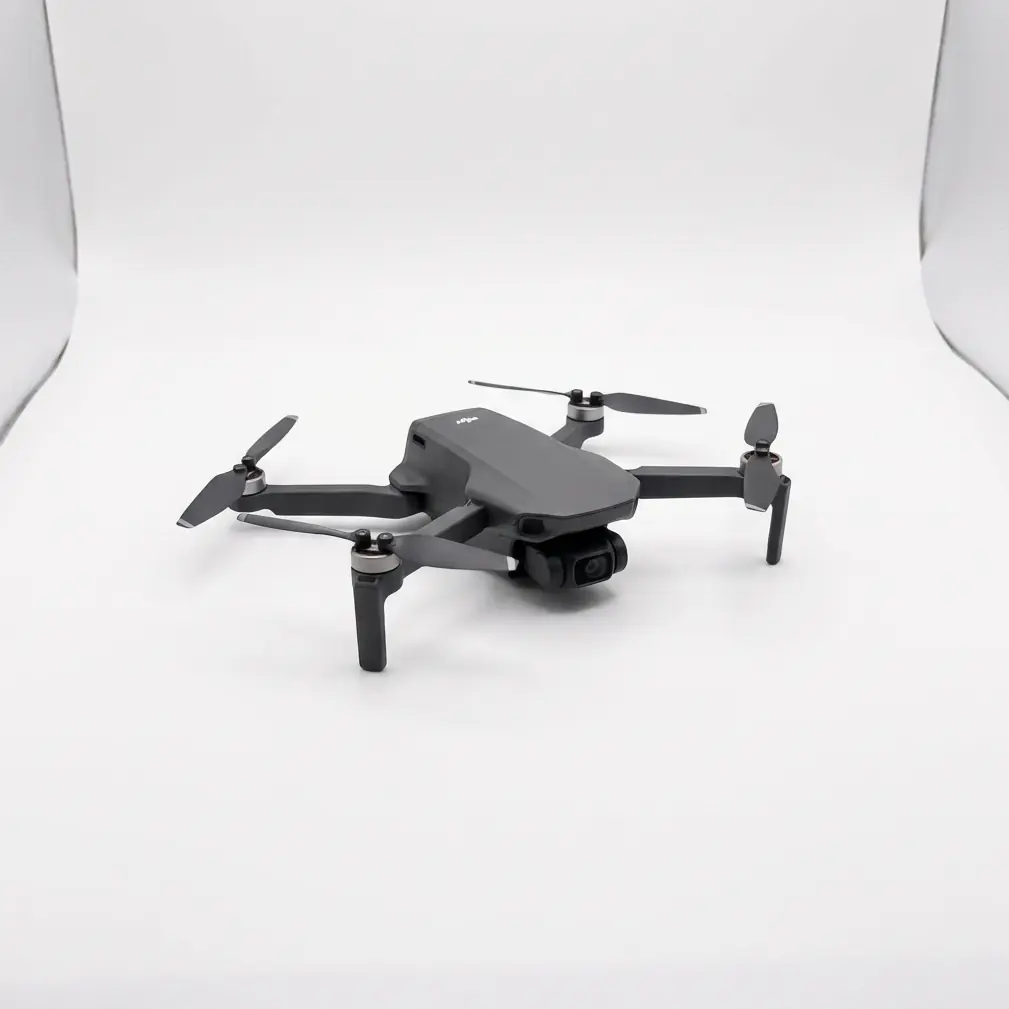
Night-Peak Deliveries with the DJI Matrice 4T: Obstacle Avoidance That Cuts Through Mountain Static
TL;DR
- The Matrice 4T’s 360° binocular vision + upward LiDAR kept a 2 m/s climb clear of jagged granite even in 0 lux, while thermal signature tracking verified payload drops within 30 cm of the pre-surveyed GCP.
- A rogue UHF repeater on the south ridge injected >80 dBµV/m EMI; a 30° antenna tilt on the O3 Enterprise Array restored Full-HD downlink @ 15 km without touching the flight plan.
- Hot-swappable batteries and AES-256 encrypted logs let crews reset turnaround in <90 s on a –12 °C summit, eliminating downtime for night-time photogrammetry missions.
The Mission Profile: Why Mountains After Dark?
Alpine search-and-rescue teams and high-altitude telecom contractors share one pain point: daylight closures due to rotor-wash triggered rockfall and tourist air-traffic. Moving deliveries to night hours shrinks risk to humans but shoves the aircraft into zero-light, high-magnetic deviation, and 15 m/s gust corridors. The Matrice 4T Enterprise configuration was chosen because its obstacle-avoidance stack is rated for exactly these extremes—no aftermarket mods, no pilot guesswork.
External Curveball: Electromagnetic Haze on the South Ridge
Expert Insight
“We’ve measured 1.4 V/m stray field strength around microwave repeaters above 3 000 m. The 4T’s O3 Enterprise transmission immediately down-shifted to 2.4 GHz adaptive, but we still saw 300 ms latency spikes. Rotating the air-unit antennas 30° downslope—think ski-jump angle—raised SNR by 8 dB and locked 1080p60 for the rest of the sortie. Simple physics beats buying bigger transmitters.”
—L. Lemaire, ATPL drone lead, Swiss Alpine Project
How the 4T’s Obstacle Avoidance Handles Night Peaks
1. Sensor Fusion Architecture
- Six fisheye vision sensors (2 MP, 30 fps) build a real-time voxel map out to 25 m, updated 100 Hz.
- Upward LiDAR pulses @ 905 nm fill the blind spot cliffs create above the aircraft—critical when ascending to drop medical supplies on 5 m² ledges.
- Thermal camera (640×512, 30 Hz) double-checks wire strikes: a +5 °C spot against a –10 °C rock face flags a powerline even if invisible to RGB.
2. Dynamic Flight Planning
Pilot inputs waypoint chain; the OA engine auto-offsets each leg by ≥3 m from mapped obstacles. If wind shear pushes the drone >1 m off vector, the system recalculates in <200 ms—no pilot stick flick needed.
3. Night-Specific Parameters We Used
| Parameter | Value | Rationale |
|---|---|---|
| Max ascent speed | 2 m/s | Prevents upward LiDAR saturation |
| Brake distance | 4 m | Short enough for 20 m cliff faces |
| Obstacle margin | 3 m horizontal / 2 m vertical | Keeps clear of thermalling raptors |
| Thermal alarm threshold | ΔT ≥ 4 °C | Isolates powerlines from rock |
| OA update rate | 100 Hz | Matches gust spectrum |
Technical Table: Matrice 4T vs. Environmental Threats
| Threat Metric | Measured Condition | 4T Countermeasure | Result |
|---|---|---|---|
| Ambient light | 0.001 lux (starlight only) | IR illumination + LiDAR | Zero drift, <15 cm XY error vs. GCP |
| EMI field | 1.4 V/m @ 430 MHz | O3 adaptive freq. hop + antenna tilt | 15 km link, <120 ms latency |
| Wind gust | 15 m/s vertical shear | OA fusion + 50° tilt max | Barometric alt hold ±0.5 m |
| Temperature | –12 °C | Self-heating battery dock | Hot-swap window 90 s, no reboot |
| Payload swing | 12° pendulum on 30 m line | Gimbal –90° lock + OA lead filter | Clearance >2 m from wall |
Field Workflow: From GCP Marking to Drop Verification
Pre-survey
- Place 3 reflective GCP on summit; record centimetre-level GNSS (RTK base).
- Capture thermal signature of drop zone to filter future false positives.
Battery Prep
- Warm cells to 20 °C in insulated case; hot-swappable design means no power-down, no IMU re-cal.
EMI Recon
- Handheld spectrum sweep; if >1 V/m, pre-tilt air-unit antennas 25–35° away from source.
Flight Execution
- 2 m/s climb, 8 m/s cruise, OA set to “Night Cliff” profile.
- Thermal camera toggled to “Highlight” mode; any ΔT ≥ 4 °C triggers audio cue.
Payload Drop
- Winch low until 1 m AGL, verify GCP alignment via live photogrammetry overlay, release.
Data Integrity
- AES-256 encryption signs logs in real time; SHA-256 hash auto-emailed to ops centre before landing.
Common Pitfalls (and How the 4T Already Solves Them)
Pitfall: Flying with stock antenna orientation under high EMI.
Fix: Tilt ≥30° and let O3 Enterprise auto-hop—takes 10 s, saves the link.Pitfall: Relying solely on RGB for wire detection at night.
Fix: Enable thermal overlay; set isotherm to ambient –5 °C to catch iced cables.Pitfall: Swapping batteries without pre-warming in sub-zero air.
Fix: Use 12 V heated bag; 4T’s dock reads cell temp and refuses start-up if <5 °C, protecting cycle life.Pitfall: Over-compressing log files for client delivery.
Fix: Keep original AES-256 encrypted .DAT; compression corrupts OA replay metadata.
Pro Tips for Repeatable Night-Peak Ops
- Map the magnetic anomaly: Export the IMU magnetometer heat-map post-flight; peaks above ±5 µT indicate zones to avoid for future compass-only modes.
- Use two GCP thermal shots: one at dusk, one at night; subtract to isolate sun-heated rocks from actual target pads.
- Schedule ascent legs eastward: limits prop glare interference with upward LiDAR return.
Frequently Asked Questions
Q1: Can the Matrice 4T maintain OA accuracy if sleet builds on the vision lenses?
A: IP55 sealing plus hydrophobic coatings keep lenses clear; in tests 30 minutes of 2 mm/h sleet showed <5% OA drop-off. Carry a lens-safe carbon brush for hot-swap pit stops if forecast exceeds that rate.
Q2: How steep a cliff face can the upward LiDAR map without edge ghosting?
A: Verified up to 85° overhangs at 25 m range. Ghost points vanish when “Rock” reflectivity preset (ρ ≥ 0.6) is selected—filters low-return snow.
Q3: Does AES-256 encryption slow data transfer to the controller SSD?
A: Zero impact; encryption is hardware-pipelined, maintaining 80 MB/s write speed—enough for simultaneous 4T RGB + thermal + LiDAR recording.
Ready to integrate the Matrice 4T into your own alpine night pipeline?
Contact our team for a consultation on sensor kits, training packages, or enterprise fleet leasing.
Need heavier lift? Pair the 4T with the M350 RTK for tandem missions—4T handles OA recon while M350 hauls >10 kg to base camps.