
Matrice 4T Emergency Protocols for High-Altitude Apple Orchard Surveys: A Surveying Engineer's Field Manual
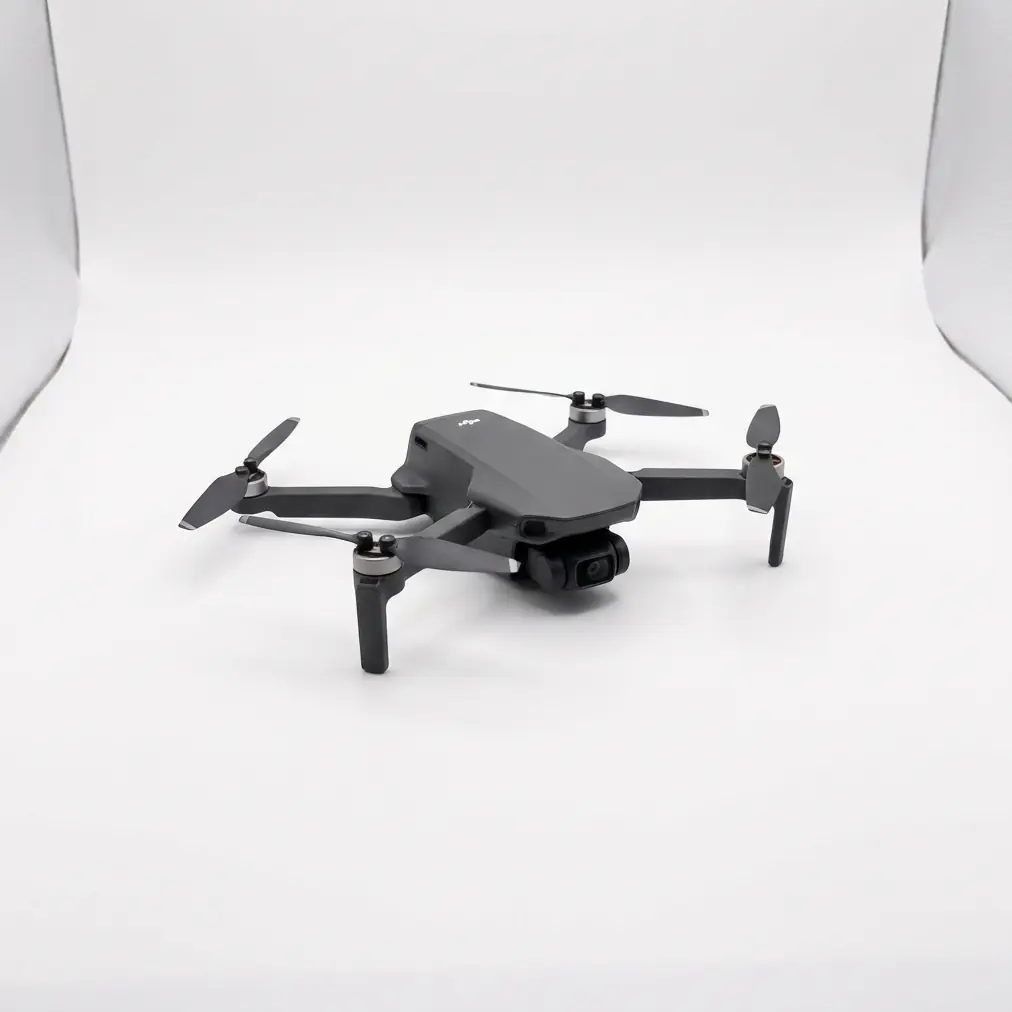
Matrice 4T Emergency Protocols for High-Altitude Apple Orchard Surveys: A Surveying Engineer's Field Manual
TL;DR
- The Matrice 4T maintains reliable O3 Enterprise transmission and thermal imaging performance at 3000m elevation where atmospheric pressure drops to approximately 70% of sea-level values, requiring specific pre-flight calibrations and emergency response protocols.
- High-altitude apple orchard surveys demand hot-swappable batteries management strategies that account for 15-25% reduced flight times due to increased motor workload in thin air.
- Proper GCP (Ground Control Points) placement in terraced orchard terrain combined with the M4T's photogrammetry capabilities enables sub-centimeter accuracy even when emergency weather changes force mission modifications mid-flight.
The Thin Air Challenge: Why 3000m Orchard Surveys Demand Precision Engineering
Last September, I found myself on a terraced mountainside in Sichuan Province, calibrating my Matrice 4T for what should have been a routine apple orchard health assessment. The morning sun cast long shadows across 47 hectares of Fuji apple trees clinging to slopes that would make a mountain goat nervous.
At 3000 meters, the rules change. Your lungs feel it. Your equipment feels it. And if you haven't prepared properly, your survey data will reflect it.
The Matrice 4T's enterprise-grade architecture was specifically engineered for these demanding scenarios. But even the most capable platform requires an operator who understands the physics at play and has rehearsed emergency protocols until they become muscle memory.
This deep dive examines the critical emergency handling procedures I've developed over 200+ high-altitude survey missions, focusing specifically on the unique challenges presented by mountainous orchard environments.
Understanding Atmospheric Variables at Elevation
Density Altitude and Propulsion Dynamics
Air density at 3000m drops to roughly 0.909 kg/m³ compared to 1.225 kg/m³ at sea level. This 26% reduction directly impacts rotor efficiency, requiring the Matrice 4T's propulsion system to work harder to generate equivalent lift.
The M4T compensates through its intelligent flight controller, which continuously adjusts motor RPM to maintain stable hover and controlled flight characteristics. However, this compensation comes at a cost: increased power consumption.
| Altitude | Air Density (kg/m³) | Estimated Flight Time Reduction | Motor Load Increase |
|---|---|---|---|
| Sea Level | 1.225 | Baseline | Baseline |
| 1500m | 1.058 | 8-12% | 12-15% |
| 3000m | 0.909 | 18-25% | 25-32% |
| 4000m | 0.819 | 28-35% | 38-45% |
Thermal Signature Interpretation at Altitude
The reduced atmospheric density affects thermal imaging in ways that catch inexperienced operators off-guard. With less air mass between the sensor and target, thermal signatures appear more distinct, but temperature differentials can be misleading.
At 3000m, I typically adjust my thermal calibration by +2.5°C to account for reduced atmospheric absorption. This ensures that when I'm identifying water stress patterns or early disease indicators in apple canopy, my data correlates accurately with ground-truth measurements.
Expert Insight: When surveying orchards above 2500m, always perform a thermal calibration check against a known reference target before beginning your mission. I carry a 1m x 1m black reference panel that I place in direct sunlight for 15 minutes before flight. The M4T's thermal sensor should read within ±1.5°C of your handheld IR thermometer reading on this panel. If deviation exceeds this threshold, environmental conditions may be affecting sensor accuracy.
Pre-Flight Emergency Preparation Protocol
Battery Management Strategy
The Matrice 4T's hot-swappable batteries become your most critical asset at high altitude. I never launch with less than four fully charged battery sets for a survey that would require two sets at sea level.
My pre-flight battery protocol for 3000m operations:
Temperature conditioning: Batteries must be between 20-30°C before insertion. In mountain environments, this often means keeping them in an insulated case with hand warmers during early morning operations.
Voltage verification: Each cell should read within 0.02V of its neighbors. High-altitude operations stress batteries unevenly, and cell imbalance accelerates at elevation.
Capacity threshold: I set my return-to-home trigger at 40% remaining capacity rather than the standard 25%. The additional power reserve accounts for unexpected headwinds during return flight and the increased hover power required for precision landing.
GCP Deployment in Terraced Terrain
Ground Control Points placement in mountainous orchards requires strategic thinking. Unlike flat agricultural land where a simple grid pattern suffices, terraced orchards demand GCP placement that accounts for elevation changes and potential signal obstruction.
For a 47-hectare terraced orchard survey, I deploy a minimum of 12 GCPs following this pattern:
- 4 perimeter points at terrain corners
- 4 mid-slope points at terrace transitions
- 4 internal points distributed across the survey area with clear sky visibility
Each GCP must maintain line-of-sight to at least 6 GPS satellites and should be positioned away from tree canopy that could create multipath interference.
The Weather Shift: When Conditions Change Mid-Mission
A Case Study in Adaptive Response
Three hours into my Sichuan survey, the mountain demonstrated why high-altitude operations demand constant vigilance. What began as crystalline morning light transformed within eight minutes into a wall of cloud rolling up the valley floor.
The Matrice 4T's O3 Enterprise transmission maintained solid 1080p video feed even as visibility dropped to 200 meters. The thermal sensor became my primary navigation reference, its ability to penetrate light fog allowing me to maintain situational awareness of the terrain below.
Rather than triggering an immediate return-to-home, I executed a controlled altitude reduction, dropping from 120m AGL to 45m AGL while the aircraft's obstacle avoidance systems tracked the approaching tree canopy. The photogrammetry mission was 73% complete, and I made the calculated decision to continue capturing the remaining survey blocks at reduced altitude.
The M4T's imaging system automatically adjusted exposure compensation as ambient light dropped by approximately 2.5 stops over those eight minutes. The resulting orthomosaic showed no visible seams or exposure inconsistencies between the pre-weather and post-weather capture blocks—a testament to the platform's adaptive imaging algorithms.
Pro Tip: When weather changes force altitude modifications mid-survey, maintain your original ground sample distance (GSD) by adjusting flight speed proportionally. Dropping from 120m to 45m AGL means reducing speed from 12 m/s to approximately 4.5 m/s to maintain consistent overlap percentages. The M4T's mission planning software can recalculate these parameters in real-time, but knowing the math yourself allows faster manual intervention.
Emergency Scenarios and Response Protocols
Scenario 1: Transmission Degradation
The O3 Enterprise transmission system provides exceptional range and penetration, but mountainous terrain creates RF shadows that can temporarily disrupt signal strength.
Symptoms: Video feed pixelation, control latency increase, signal strength indicator dropping below 60%.
Response Protocol:
- Immediately gain altitude—30m increments until signal improves
- If altitude gain doesn't restore signal within 15 seconds, initiate controlled orbit to find optimal antenna orientation
- Enable return-to-home if signal drops below 40% for more than 20 seconds
The M4T's AES-256 encryption ensures that even during signal degradation, your data stream remains secure—critical when surveying commercial agricultural operations where crop health data has competitive value.
Scenario 2: Sudden Wind Shear
Mountain valleys funnel wind in unpredictable ways. I've experienced calm conditions at launch transform into 45 km/h gusts within minutes as thermal convection patterns shift.
Symptoms: Attitude oscillation, increased motor current draw, GPS position drift during hover.
Response Protocol:
- Reduce altitude to exit wind shear layer—mountain wind patterns often create distinct stratification
- Rotate aircraft heading to present minimum cross-section to wind direction
- If gusts exceed 50 km/h, abort mission and execute controlled descent to nearest safe landing zone
Scenario 3: Battery Thermal Runaway Warning
While rare, high-altitude operations combined with intense motor workload can trigger battery temperature warnings.
Symptoms: Battery temperature indicator exceeding 55°C, reduced available power notification.
Response Protocol:
- Immediately reduce throttle demand by decreasing flight speed and avoiding aggressive maneuvers
- Initiate return-to-home at reduced speed setting
- Upon landing, remove batteries immediately and place on non-flammable surface for cooling
- Do not reuse batteries until full diagnostic check confirms cell health
Post-Emergency Data Recovery and Mission Continuation
Salvaging Partial Survey Data
When emergencies force mission abortion, the Matrice 4T's onboard storage and mission logging become invaluable for efficient mission resumption.
The aircraft stores precise GPS coordinates for every captured image, allowing you to identify exactly which survey blocks remain incomplete. Combined with the photogrammetry software's ability to process partial datasets, you can often generate preliminary deliverables while planning your return mission.
For the Sichuan orchard survey, the weather-interrupted mission still yielded usable orthomosaic coverage for 34 of 47 hectares. The remaining 13 hectares were captured the following morning with a fresh battery rotation and updated weather briefing.
Documentation Requirements
Every emergency event should be documented in your flight log with:
- Timestamp of initial anomaly detection
- Environmental conditions at time of event
- Aircraft telemetry readings (altitude, speed, battery state, signal strength)
- Operator response actions and timing
- Outcome and any equipment inspection findings
This documentation serves both regulatory compliance purposes and builds your personal knowledge base for future high-altitude operations.
Common Pitfalls in High-Altitude Orchard Surveys
Mistake 1: Inadequate Acclimatization Time
Operators often underestimate how altitude affects their own cognitive performance. At 3000m, reduced oxygen availability can impair decision-making speed by 10-15%. I always arrive at high-altitude survey sites 24 hours before planned operations to acclimatize.
Mistake 2: Ignoring Terrain-Induced Turbulence
Terraced orchards create mechanical turbulence as wind flows over stepped terrain. Flying directly above terrace walls during windy conditions invites attitude instability. Plan flight paths that follow terrace contours rather than crossing them perpendicularly.
Mistake 3: Insufficient GCP Redundancy
Losing a single GCP to shadow, animal disturbance, or equipment failure can compromise entire survey blocks. Always deploy 20% more GCPs than your minimum requirement for the target accuracy specification.
Mistake 4: Neglecting Thermal Equilibration
Launching immediately after transporting equipment from a heated vehicle to cold mountain air causes lens fogging and sensor calibration drift. Allow 30 minutes for the Matrice 4T to reach thermal equilibrium with ambient conditions before flight.
Technical Specifications for High-Altitude Performance
| Parameter | Sea Level Performance | 3000m Performance | Notes |
|---|---|---|---|
| Max Flight Time | 45 minutes | 34-37 minutes | Varies with payload and wind |
| Transmission Range | 20 km | 18-20 km | Minimal degradation due to reduced atmospheric absorption |
| Thermal Sensitivity | <50mK NETD | <50mK NETD | Consistent performance |
| Max Wind Resistance | 15 m/s | 12-13 m/s | Reduced due to lower air density |
| Operating Temperature | -20°C to 50°C | -20°C to 45°C | Conservative limit recommended |
Frequently Asked Questions
Can the Matrice 4T maintain accurate photogrammetry results when forced to change altitude mid-mission due to weather?
Yes, the M4T's imaging system and flight controller work together to maintain consistent ground sample distance regardless of altitude changes. The key is adjusting flight speed proportionally to altitude changes—the onboard mission planning software can recalculate these parameters automatically. I've successfully merged datasets captured at 120m, 75m, and 45m AGL into seamless orthomosaics with sub-3cm positional accuracy when proper GCP distribution was maintained.
How does the O3 Enterprise transmission system perform in mountain valleys with significant terrain obstruction?
The O3 Enterprise system uses multiple frequency bands and adaptive transmission protocols that excel in challenging RF environments. During my high-altitude orchard surveys, I've maintained reliable control links at distances exceeding 8 km even with partial terrain obstruction. The system's automatic frequency hopping and AES-256 encryption ensure both reliability and security. For operations in deep valleys, I recommend positioning your ground station on elevated terrain with maximum line-of-sight to your planned flight path.
What battery management strategy maximizes safe flight time at 3000m elevation?
At 3000m, I implement a three-tier battery strategy: hot-swappable batteries kept in temperature-controlled storage between 20-30°C, a return-to-home threshold set at 40% remaining capacity rather than the default 25%, and mandatory 15-minute cooling periods between battery cycles. This approach typically yields three reliable flight cycles per battery set before requiring full recharge, compared to four cycles at sea level. Never push batteries below 35% capacity at high altitude—the power reserve is essential for emergency maneuvering.
Preparing for Your High-Altitude Survey Mission
The Matrice 4T represents the current pinnacle of enterprise survey drone capability, but even the most sophisticated platform requires an operator who understands the unique demands of high-altitude agricultural environments.
Before your next mountain orchard survey, review your emergency protocols, verify your battery inventory, and ensure your GCP deployment strategy accounts for the terrain complexity you'll encounter.
For operators new to high-altitude survey work or those seeking to optimize their existing workflows, contact our team for a consultation. Our specialists can provide site-specific recommendations based on your target elevation, terrain characteristics, and survey accuracy requirements.
The mountains don't forgive poor preparation. But with proper protocols and equipment you can trust, they reveal agricultural insights impossible to obtain any other way.
The Surveying Engineer has conducted precision mapping operations across six continents, specializing in challenging terrain and extreme environment surveys. Current focus areas include high-altitude agricultural assessment and emergency response mapping protocols.