
DJI Neo for Remote Field Inspection: What Actually Matters
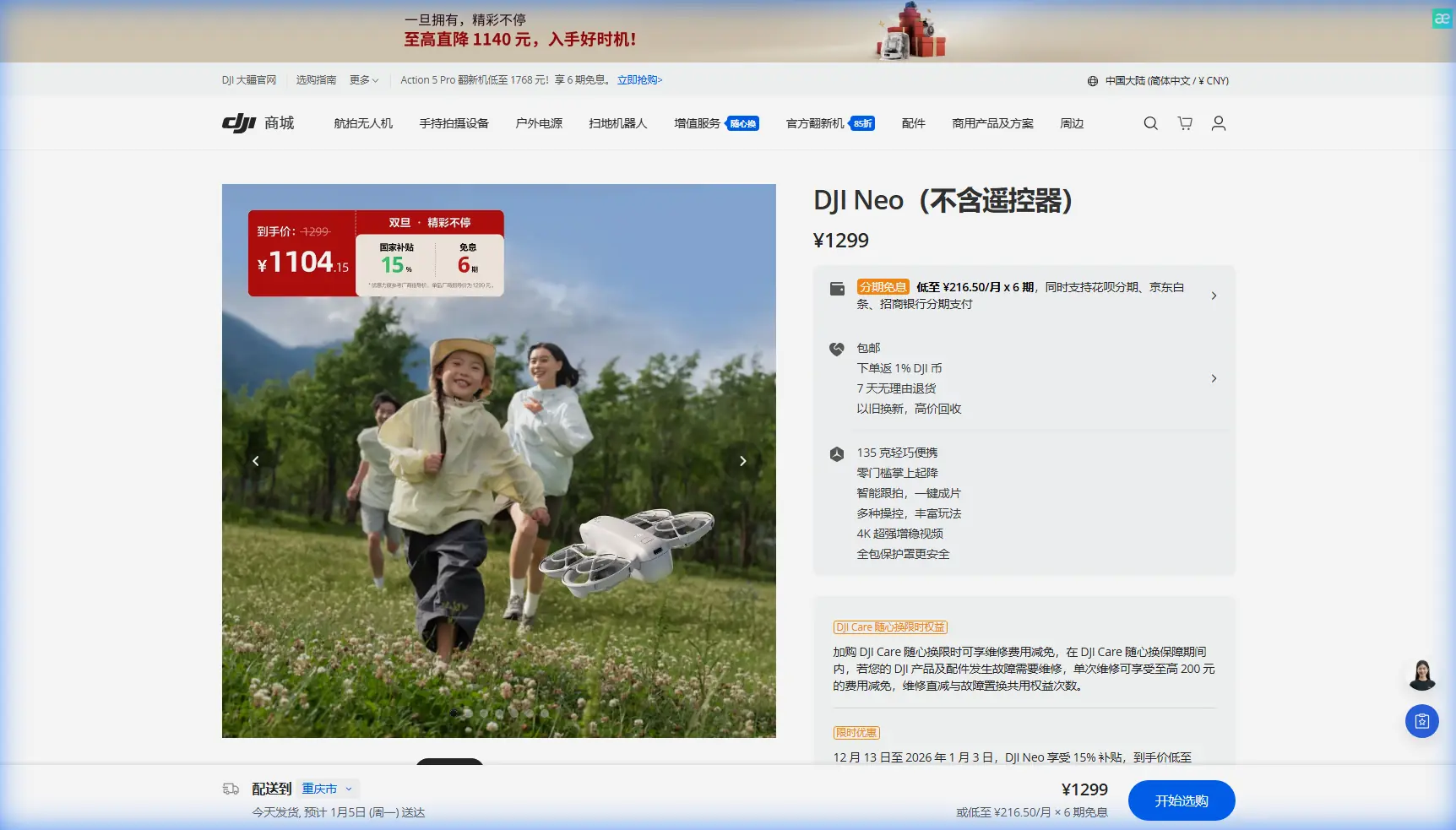
DJI Neo for Remote Field Inspection: What Actually Matters When You’re Far From the Road
META: A practical expert guide to using DJI Neo for remote field inspection, covering obstacle avoidance, subject tracking, QuickShots, Hyperlapse, D-Log, and why its lightweight design suits fieldwork.
Remote field inspection punishes weak gear and weak assumptions.
You hike out farther than planned. Wind shifts over uneven ground. Trees break up your line of sight. Sun glare wipes out your phone screen. By the time you reach the area that actually needs checking, the last thing you want is a drone that demands a flat launch pad, a complicated setup routine, or a second person just to get reliable footage.
That is where DJI Neo becomes interesting.
On paper, Neo looks like a small, approachable aircraft built for creators. In practice, that compact design changes the field-inspection workflow in ways that matter to people checking crops, fencing lines, drainage channels, access tracks, irrigation equipment, and hard-to-reach land features. It is not a replacement for every enterprise mapping platform, and it should not be treated like one. But for many remote inspection tasks, especially fast visual checks, Neo solves a very real problem: getting useful aerial visibility without turning the outing into a full drone operation.
As a photographer, I tend to notice where a drone stops behaving like a machine and starts fitting into the rhythm of the job. Neo gets closer to that point than many larger alternatives because it removes friction. That sounds small until you are standing in a field with dirt, tall grass, uneven terrain, and no obvious place to launch.
The real problem with remote field inspection
Most remote inspections are not glamorous. They are repetitive, time-sensitive, and often physically inconvenient.
You may be trying to answer simple but costly questions:
- Has water pooled where it should not?
- Is a fence line intact across rough ground?
- Did livestock tracks cut into a soft area after rain?
- Are crop rows showing uneven growth in one section?
- Is a remote access path still usable for equipment?
- Has vegetation started to encroach around a ditch or structure?
The challenge is rarely “can a drone fly there?” The challenge is whether the aircraft can be deployed fast enough, safely enough, and simply enough that you actually use it every time you need it.
A lot of drones with stronger specifications on paper lose their advantage right there. They may offer more advanced sensor arrays, longer endurance, or more formal mapping capability. But if they require a careful unpacking process, more room for takeoff, and more operator attention in cluttered or awkward terrain, they become harder to justify for quick field checks.
Neo’s edge is that it reduces the threshold for aerial inspection.
Why Neo makes sense for this kind of work
Neo’s small form factor is not just a portability perk. In remote field environments, it changes deployment.
When you are inspecting fields in places where vehicle access is poor, every gram matters. A drone you can carry almost as casually as another tool gets used more often than one that feels like a dedicated mission kit. Neo’s lightweight build also makes hand launch and hand recovery part of its practical appeal. That matters when the ground is muddy, rocky, overgrown, or simply unsuitable for a clean takeoff.
This is where Neo starts to outshine some competitors in the “small drone” category. Many compact drones are portable, but not all of them are equally forgiving when conditions get messy. Neo’s design is especially useful for users who need to move frequently, stop briefly, inspect one area, then continue on foot or by utility vehicle.
For remote fields, the best drone is often the one you can launch in under a minute without overthinking it.
Obstacle avoidance is not a luxury in field environments
The phrase “open field” can be misleading. Remote agricultural and land-management areas are often full of obstacles: tree lines, utility poles, irrigation rigs, sheds, windbreaks, boundary fences, and uneven terrain that changes your viewing angle without warning.
That is why obstacle avoidance deserves more respect than it usually gets in discussions about small drones.
In practical inspection work, obstacle sensing is less about flashy autonomy and more about reducing pilot workload. If you are trying to inspect a drainage swale near brush, or follow a fence line that cuts close to scrub and branches, you do not want all your attention consumed by proximity management. You want enough assistance to keep the aircraft stable and predictable while you focus on what you came to inspect.
Neo’s obstacle avoidance features matter operationally because they support low-altitude visual work, where small mistakes happen fast. For field users, this means fewer interrupted flights, less mental strain, and more confidence when navigating around natural and man-made obstacles.
That does not eliminate the need for skill. It does mean the drone can better support a solo operator who is juggling terrain, sunlight, battery awareness, and the inspection objective at the same time.
Subject tracking and ActiveTrack are more useful in inspection than people assume
A lot of people hear subject tracking and think of action clips, not fieldwork. That is too narrow.
ActiveTrack and related subject-following tools can be surprisingly valuable when you are inspecting remote land alone. Imagine walking a levee edge, moving along a field boundary, or tracing an irrigation path while keeping visual context in the frame. Instead of constantly managing both your route and the aircraft’s composition, tracking tools let the drone maintain attention on you or your movement path while still capturing the area around you.
For solo operators, that is operationally significant. It reduces stop-start flying. It helps document your route through an area. And it creates footage with immediate context, which is often what stakeholders need when they review conditions later. A still image of erosion is useful; a moving visual record showing where that erosion sits relative to the access track, vegetation line, and drainage path is better.
Compared with competing entry-level drones that offer limited or less refined tracking behavior, Neo stands out by making these intelligent flight features accessible in a smaller, less intimidating package. That combination is what makes it relevant for field inspection rather than just recreational flying.
QuickShots are not just for social media
QuickShots often get dismissed because they are associated with polished, automated camera moves. That misses their practical value.
In inspection work, consistency matters. If you revisit the same site weekly or monthly, having repeatable aerial motions can help you document change over time. An automated reveal, orbit, or pullback is not merely aesthetic. It can become a visual reference pattern. When used carefully, it lets you compare vegetation spread, water level changes, soil disturbance, or infrastructure condition across multiple site visits.
Neo’s QuickShots can shorten the time needed to capture these repeatable sequences. Instead of manually flying the same movement every time and getting slightly different framing, the operator can rely on guided flight patterns that produce more standardized visual records.
That is especially helpful for users who are not full-time pilots but still need dependable documentation.
Hyperlapse has field value when change over time is the story
Hyperlapse is another feature that gets underestimated in work contexts.
If your inspection goal includes observing movement or gradual transition, Hyperlapse can help condense time into something easier to analyze. Clouds rolling over irrigation zones, shadows crossing a crop section, machinery movement along a track, or changing water behavior in a drainage area can all become easier to interpret when compressed into a short sequence.
The value here is not cinematic flair. It is temporal clarity.
For remote field users, that can turn a long, boring observation period into a concise visual record. Instead of lingering on site and later scrubbing through full-length footage, you can build a short sequence that highlights the pattern you were there to verify.
D-Log matters if inspection footage needs to hold up later
Color profiles sound like a photographer’s obsession until you are trying to recover details from harsh midday light.
Field inspections often happen when the weather allows, not when the light is ideal. Bright sky, reflective water, pale soil, and deep shadow under tree lines can all exist in the same scene. D-Log gives more flexibility when you need to preserve tonal information and make the footage more readable afterward.
Operationally, this matters for one simple reason: evidence quality.
When you review a site later, or share footage with a farm manager, landowner, contractor, or consultant, image information matters more than a punchy out-of-camera look. D-Log can help retain detail in highlights and shadows, making it easier to interpret subtle differences in terrain condition, surface moisture, or vegetation stress.
That is a meaningful advantage over drones that produce more heavily baked-in footage with less room for correction.
Where Neo excels compared with bigger or more specialized options
Neo is not the best tool for every aerial task. If you need large-area orthomosaic mapping, survey-grade outputs, or long-duration corridor missions, you should be looking at other platforms.
But that is exactly why Neo deserves a clearer identity.
It excels when the job is visual inspection rather than formal survey. It excels when the operator is alone. It excels when terrain makes setup awkward. It excels when the flight needs to happen now, not after a full equipment routine.
This is where some competitors miss the mark. They may promise more capability overall, but they often demand more deliberate operation to unlock it. Neo’s strength is accessibility without becoming trivial. It gives you obstacle avoidance, ActiveTrack, QuickShots, Hyperlapse, and D-Log in a format that suits opportunistic field use.
That combination is rare. Usually you get either simplicity with limited control, or stronger imaging tools in a larger system that slows you down.
Neo sits in the middle in a very useful way.
A smarter workflow for remote inspections
If I were building a practical Neo workflow for remote field checks, I would keep it simple:
Start with a short hover and orientation pass. Use that to assess wind, obstacles, and light direction.
Then run a low-altitude visual sweep over the target area. This is where obstacle avoidance reduces stress and helps you stay focused on what you are inspecting.
If the route matters, use ActiveTrack or subject tracking to document movement along the boundary or access path.
Capture one or two repeatable QuickShots from the same position each visit if the site will be revisited. That creates a visual archive that is easier to compare over time.
Switch to D-Log when lighting is harsh or contrast is high and footage may need closer review later.
If the site involves changing conditions over a stretch of time, use Hyperlapse selectively rather than recording long clips you may never fully analyze.
That approach turns Neo from a casual flying camera into a disciplined field documentation tool.
The human factor: why small drones often win
There is another truth about remote inspections that spec sheets ignore: fatigue changes decisions.
When people are tired, hot, under time pressure, or dealing with rough terrain, they simplify. They skip steps. They avoid extra gear. They make compromises. A drone that is easy to deploy is not just convenient; it is more likely to be used correctly and consistently.
That is one reason Neo has real appeal for people inspecting fields in remote areas. It lowers the activation energy of flight. The aircraft feels less like an event and more like an extension of the inspection process.
For photographers, that means more chances to capture meaningful context. For land managers and field operators, it means more reliable visibility without hauling in a heavier platform every time.
If you are trying to decide whether Neo fits your use case, the key question is not whether it can do everything. It is whether it can help you see enough, fast enough, in the places where ground access and time are both working against you.
In many field situations, the answer is yes.
If you want to talk through whether Neo fits your terrain, workflow, or inspection routine, you can message a drone specialist directly here.
Ready for your own Neo? Contact our team for expert consultation.