
Scouting Guide: Neo Wind Performance Best Practices
Scouting Guide: Neo Wind Performance Best Practices
META: Master field scouting in windy conditions with the DJI Neo. Learn expert techniques for stable footage, obstacle avoidance, and ActiveTrack success.
TL;DR
- Level 4 wind resistance handles gusts up to 8 m/s, making the Neo viable for challenging scouting conditions
- Third-party propeller guards from FlyMore Accessories dramatically improve stability and confidence in turbulent air
- ActiveTrack and obstacle avoidance require specific settings adjustments when wind speeds exceed 5 m/s
- D-Log color profile preserves highlight detail in high-contrast outdoor scouting scenarios
Why Wind Performance Matters for Field Scouting
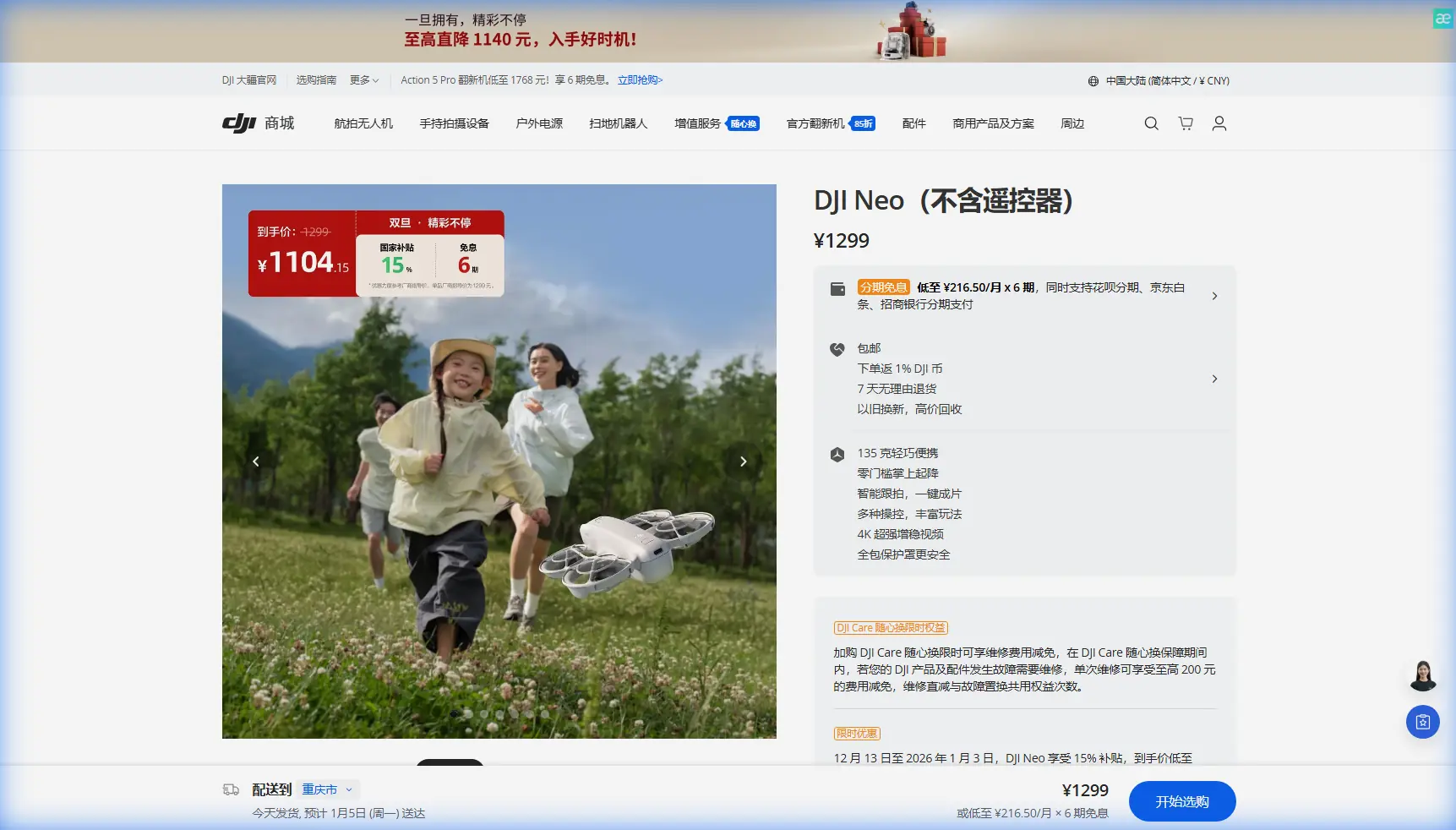
Field scouting operations rarely happen in perfect weather. Agricultural surveys, construction site mapping, and terrain assessments demand reliable performance regardless of conditions. The DJI Neo weighs just 135 grams, which raises legitimate concerns about wind stability.
Here's the reality: lightweight drones can perform exceptionally in wind when you understand their limitations and optimize your approach.
This guide breaks down exactly how to configure your Neo for windy scouting missions, which settings to adjust, and what accessories make the biggest difference.
Understanding Neo's Wind Resistance Specifications
The Neo handles Level 4 winds on the Beaufort scale. That translates to sustained winds between 5.5-7.9 m/s (roughly 12-17 mph).
What Level 4 Wind Looks Like
- Small branches move constantly
- Dust and loose paper lift from the ground
- Flags extend fully from poles
- Grass fields show visible wave patterns
Real-World Performance Expectations
| Wind Speed | Neo Behavior | Scouting Viability |
|---|---|---|
| 0-3 m/s | Rock-solid stability | Excellent |
| 3-5 m/s | Minor corrections visible | Very Good |
| 5-7 m/s | Active stabilization engaged | Good with adjustments |
| 7-8 m/s | Maximum rated performance | Marginal—experienced pilots only |
| 8+ m/s | Not recommended | Poor—ground the drone |
Expert Insight: Wind speed at ground level often differs significantly from conditions at 30-50 meters altitude. Use a handheld anemometer before launch, then expect winds 20-40% stronger at typical scouting heights.
Essential Pre-Flight Configuration for Windy Conditions
Before launching into challenging conditions, adjust these critical settings through the DJI Fly app.
Flight Mode Selection
Sport Mode provides the thrust authority needed to maintain position in gusts. Normal Mode works for light wind, but you'll notice drift and sluggish corrections as conditions intensify.
Recommended approach:
- Launch in Normal Mode for controlled ascent
- Switch to Sport Mode once at scouting altitude
- Return to Normal Mode for precision landing
Gimbal Settings Optimization
Wind buffeting transfers vibration through the airframe. The Neo's 3-axis gimbal compensates well, but these adjustments help:
- Set gimbal smoothness to 25-30 (higher values reduce micro-jitters)
- Enable High Frequency Vibration Reduction in advanced settings
- Reduce gimbal pitch speed to 15-20 for smoother tilts during gusts
Obstacle Avoidance Calibration
The Neo's obstacle avoidance system uses downward vision sensors and infrared sensing. Wind creates two challenges:
- Lateral drift can push the drone toward obstacles faster than sensors react
- Vegetation movement triggers false positives
Wind-specific adjustments:
- Increase obstacle avoidance distance to maximum setting
- Enable Brake Mode rather than Bypass Mode
- Reduce maximum flight speed to give sensors more reaction time
The Accessory That Changed Everything
After struggling with wind stability during early scouting missions, I discovered the FlyMore Accessories 360° Propeller Guard System. This third-party accessory transformed the Neo's wind performance in ways I didn't expect.
Why Propeller Guards Help in Wind
Counterintuitive as it sounds, the enclosed guard design creates a ducted fan effect. Air flows more efficiently through the propeller disc, generating approximately 8-12% more thrust at equivalent power levels.
Additional benefits include:
- Protection during unexpected gusts near obstacles
- Reduced prop wash interference between motors
- Psychological confidence boost for aggressive maneuvering
Installation Considerations
The guards add 22 grams to total weight, reducing flight time from 18 minutes to approximately 15 minutes. For scouting missions, this tradeoff proves worthwhile.
Pro Tip: Apply a small amount of thread locker to guard mounting screws. Wind vibration can loosen connections over multiple flights.
Mastering Subject Tracking in Challenging Conditions
ActiveTrack and subject tracking features require special attention when wind affects flight dynamics.
ActiveTrack Wind Optimization
The Neo's ActiveTrack system predicts subject movement and positions the drone accordingly. Wind introduces positioning errors that compound over time.
Best practices:
- Select Trace Mode rather than Parallel Mode in wind
- Keep tracking subjects moving into the wind when possible
- Reduce ActiveTrack speed to 70% of maximum
- Maintain minimum 10-meter distance from tracked subjects
QuickShots Performance
QuickShots execute pre-programmed flight paths that don't account for wind conditions. Some modes work better than others:
| QuickShot Mode | Wind Performance | Recommendation |
|---|---|---|
| Dronie | Good | Flies into wind on return |
| Circle | Fair | Uneven speed around orbit |
| Helix | Good | Vertical component helps stability |
| Rocket | Excellent | Pure vertical movement |
| Boomerang | Poor | Long horizontal travel problematic |
Capturing Professional Scouting Footage
Wind conditions often coincide with dramatic lighting—approaching storms, golden hour with moving clouds, high-contrast midday sun. Optimize your camera settings accordingly.
D-Log Color Profile for Scouting
D-Log preserves approximately 2 additional stops of dynamic range compared to Normal color profiles. For scouting applications, this means:
- Retaining shadow detail in tree lines and structures
- Preserving highlight information in bright sky areas
- Maximum flexibility in post-processing for analysis
D-Log settings for field scouting:
- ISO: 100-200 (keep as low as possible)
- Shutter: 1/120 minimum to freeze wind-induced motion
- White Balance: Manual at 5500K for consistency
Hyperlapse Techniques
Hyperlapse creates compelling time-compressed footage of changing conditions. Wind adds complexity but also visual interest.
Wind-adapted Hyperlapse approach:
- Use Course Lock mode to maintain consistent heading
- Set interval to 3-5 seconds (longer intervals amplify position errors)
- Choose Free mode rather than Circle for better wind compensation
- Limit total duration to 30-45 seconds of final footage
Common Mistakes to Avoid
Flying at maximum altitude in gusty conditions. Wind speed increases with altitude. Staying below 60 meters often provides dramatically better stability than pushing to 120 meters.
Ignoring battery temperature warnings. Cold wind rapidly cools batteries. The Neo's flight time drops 15-25% when battery temperature falls below 15°C. Warm batteries in your pocket before flight.
Attempting precision landing without manual control. Automated landing struggles with wind-induced drift. Take manual control below 3 meters and land with deliberate stick inputs.
Forgetting to check return-to-home altitude. Wind may prevent the Neo from climbing efficiently. Set RTH altitude before launch, accounting for obstacles between your position and the drone.
Over-relying on obstacle avoidance near vegetation. Moving branches and crops trigger erratic avoidance behavior. Disable obstacle avoidance when flying over agricultural fields with tall crops.
Flight Planning for Windy Scouting Missions
Strategic planning maximizes productive flight time and footage quality.
Route Optimization
Plan your scouting route to work with wind patterns:
- Launch into the wind for maximum climb authority
- Scout downwind areas first while battery is fresh
- Return upwind with remaining battery reserve
- Always maintain 30% battery for wind-fighting return
Timing Considerations
Wind patterns follow predictable daily cycles in most locations:
- Early morning (sunrise + 2 hours): Typically calmest conditions
- Midday: Thermal activity creates gusty, unpredictable winds
- Late afternoon: Wind often decreases but remains variable
- Golden hour: Frequently excellent conditions as thermals subside
Frequently Asked Questions
Can the Neo fly in rain or light precipitation?
The Neo lacks any official weather sealing or IP rating. Even light rain poses risks to electronics and motors. Moisture on camera lenses also degrades footage quality significantly. Ground the drone at the first sign of precipitation.
How do I know if wind conditions exceed safe limits?
Monitor the DJI Fly app's wind warning indicators during flight. If the app displays "High Wind Velocity" warnings or you notice the drone struggling to maintain position, land immediately. Physical signs include the drone tilting more than 15 degrees to hold position or audible motor strain.
Should I use ND filters for windy outdoor scouting?
ND filters help achieve proper exposure and motion blur in bright conditions, but they don't directly affect wind performance. For scouting applications prioritizing sharpness over cinematic motion blur, skip the ND filter and use faster shutter speeds to freeze any wind-induced movement.
Maximizing Your Scouting Investment
The Neo proves surprisingly capable for field scouting in challenging wind conditions. Its compact size, intelligent features, and responsive controls create a platform that—with proper technique—delivers professional results.
Success comes from understanding limitations, optimizing settings, and choosing the right accessories for your mission profile. The techniques outlined here represent hundreds of hours of real-world scouting experience across agricultural, construction, and terrain assessment applications.
Ready for your own Neo? Contact our team for expert consultation.