
Expert Scouting with Neo: How Smart Payload Thinking
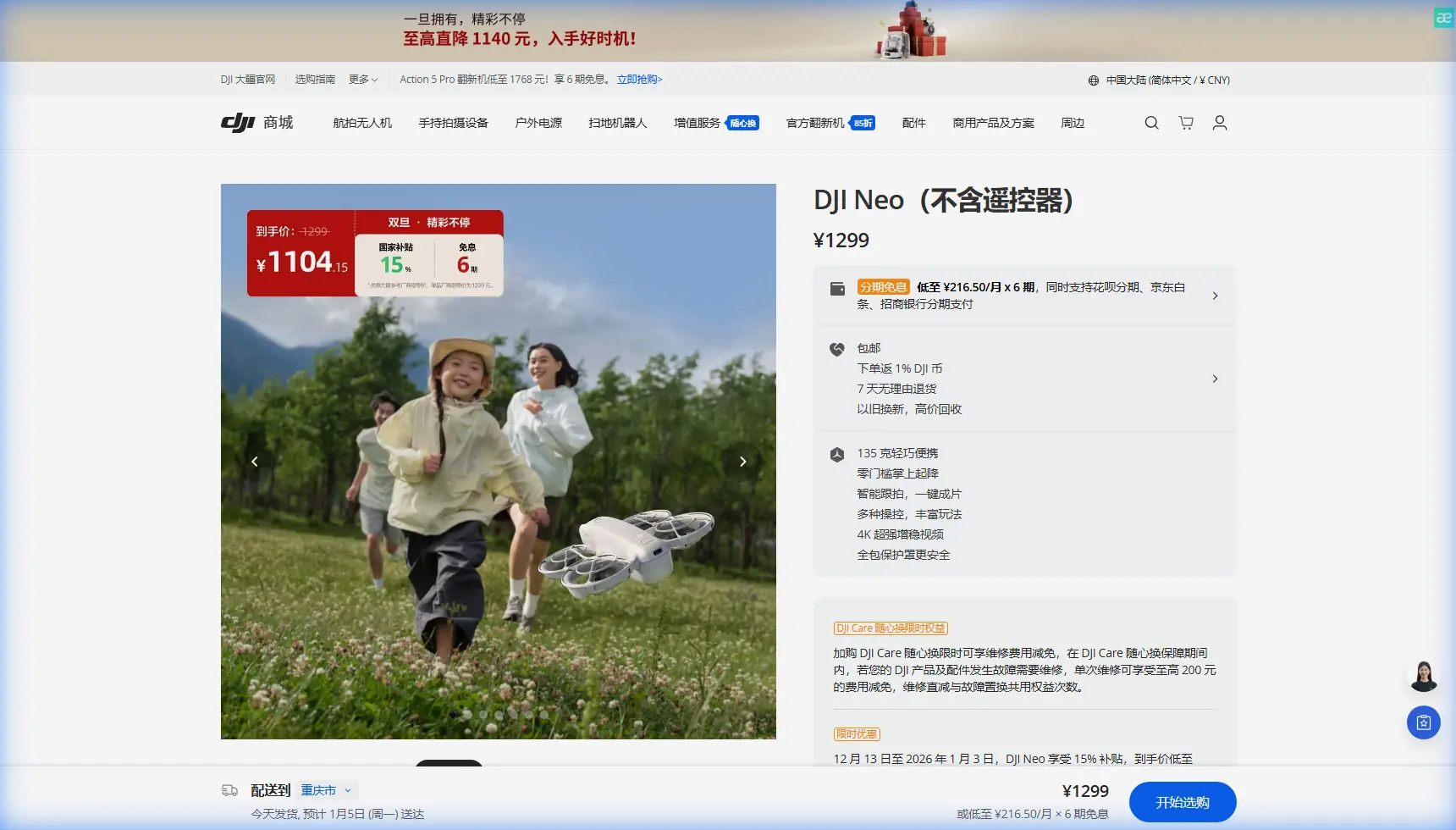
Expert Scouting with Neo: How Smart Payload Thinking Improves Urban Field Work
META: Learn how to use Neo for urban field scouting by applying real UAV imaging principles, from visible-light capture to thermal and UV inspection logic, with practical workflow tips for safer, sharper results.
Urban scouting looks simple until the light turns awkward, the background gets busy, and the subject you need to assess sits next to glass, steel, cables, and reflective roofs. That is where a small drone like Neo stops being just a flying camera and starts becoming a decision tool.
I approach Neo as a photographer first, but not only as a photographer. Good urban field scouting depends on understanding what a camera can see, what it cannot see, and how to build a workflow around those limits. The reference material behind this article is unusually useful for that because it explains a truth many drone users overlook: visible imaging, infrared imaging, and ultraviolet imaging do not compete with each other. They solve different detection problems.
That matters even if your immediate mission with Neo is civilian scouting in built-up spaces rather than utility inspection with specialized sensors. Once you understand why visible-light payloads remain foundational, and why thermal and UV systems are treated as complementary rather than interchangeable, you make better choices about framing, timing, route planning, and risk management.
Why visible-light payloads still lead the mission
The source material divides UAV visible payloads into two core categories: optical cameras and television cameras. That may sound dated on the surface, but the distinction still maps cleanly onto modern drone use.
An optical camera is described as a classic imaging device with one overriding strength: very high resolution. The text goes so far as to say other imaging detectors still cannot match that level of detail. Operationally, that is the reason visible-light capture remains the backbone of urban scouting. When you are evaluating rooftop access, façade condition, vegetation encroachment, alley clearance, pedestrian flow around a site, or the practical line of sight for a future shoot, detail is not a luxury. It is the job.
Neo fits that logic well. For city fieldwork, high-detail visible capture gives you the kind of evidence that helps you revisit a scene later without immediately needing a second site visit. Small objects matter in urban environments: drain lines, HVAC units, temporary barriers, narrow service lanes, power runs, reflective surfaces, and signage. A drone that captures those reliably saves time and reduces uncertainty.
The source also notes that television cameras on UAVs are widely used because they are small, light, low-power, sensitive, resistant to shock and vibration, and long-lived. Those characteristics are not abstract engineering trivia. They directly explain why compact drones are so effective in dense environments. Urban scouting usually rewards payloads that can launch fast, hover confidently, and survive repeated starts, stops, and route adjustments. A drone platform meant for quick deployment has an edge when your window for flying is short or the site is active.
Neo’s appeal in this context is not that it replaces every specialist platform. It is that it turns visible-light reconnaissance into a friction-light process. That makes a difference when your work involves repeated urban scouting rather than a one-off cinematic flight.
The practical lesson from dual-sensor systems
One of the most useful facts in the reference is that UAV television cameras are often paired with infrared imagers in a dual-optics gimbal system to support all-weather, real-time image monitoring. The phrase “all-weather” should be read carefully here. It does not mean every drone can do every mission in every condition. It means professionals pair sensing methods because the world does not present the same clues under all conditions.
For a Neo user, the lesson is strategic: do not ask one imaging mode to answer every field question.
Visible-light imaging is ideal when you need shape, texture, color, access context, and documentation quality. It is also the right tool for most creative scouting tasks in urban spaces. Subject tracking for moving pedestrians or cyclists, obstacle avoidance around trees and structures, and fast framing modes like QuickShots all depend on this visible-data-first way of seeing. Hyperlapse planning also benefits from it because urban motion layers—traffic, shadows, crowd flow, changing reflections—are legible in visible imagery long before they become a clean time-lapse sequence.
Where Neo often outperforms bulkier alternatives is speed of iteration. In city scouting, you rarely need a slow ritual. You need a drone you can launch, reposition, test a route, check a rooftop edge, evaluate foreground clutter, and repeat. If the platform is easy to fly and confident around obstacles, you can spend more attention on composition and site interpretation rather than just aircraft management.
That is why obstacle avoidance and ActiveTrack are not gimmicks in this scenario. They help close the gap between what you want to inspect and what you can safely capture in tight spaces. Competitors may offer strong image quality on paper, but if the workflow is slower or the aircraft feels less comfortable in constrained urban geometry, the practical result is fewer useful scouting passes and more missed moments.
What infrared teaches us, even when Neo is flying visible-only missions
The reference defines infrared thermal imaging in simple but powerful terms: it detects a target’s infrared radiation, converts that into a visible image, and helps reveal and obtain target parameters. In plain field language, thermal imaging is not showing you “better color.” It is showing a different physical reality.
Why should a Neo operator care?
Because thermal logic sharpens visible-light scouting decisions. It reminds you that a clean-looking scene may still hide operational issues, and that not every anomaly is visible in the same way. In civilian work, this becomes relevant in property review, roof moisture suspicion, HVAC screening, solar array checking, and building envelope assessment. Neo may not be the thermal instrument in that workflow, but it can be the first-pass platform that maps access paths, identifies vantage points, documents context, and flags where a specialist thermal follow-up would be worthwhile.
This distinction saves time. It also prevents overconfidence.
For example, a roof section may look visually uniform from a standard orbit, yet a separate thermal inspection could later reveal heat irregularities. If you understand that visible and thermal imaging answer different questions, you stop trying to force visible footage to do diagnostic work it was never meant to do. Instead, you use Neo to produce the best possible visual map of the site: geometry, entry points, surface condition, obstruction zones, and comparison angles for later review.
That is one reason D-Log or any flatter capture profile matters in scouting. Not because a scouting mission needs heavy grading for style, but because preserving tonal information can help when you are reviewing reflective roofs, shaded courtyards, bright concrete, and dark service corridors in the same flight. In urban scenes, dynamic range often determines whether your footage is merely attractive or genuinely useful.
The most overlooked insight in the source: UV and IR are complementary, not substitutes
The strongest operational point in the reference concerns high-voltage equipment inspection. It explains that when ionization discharge occurs in high-voltage equipment, different conditions can produce corona, flashover, or arc behavior. It then states that ultraviolet imaging receives UV signals created by discharge, processes them, and overlays them with visible imagery to identify the position and intensity of corona. Just as crucially, the text says corona is a luminous local surface discharge caused by ionization in areas of high electric field strength, and that it produces only tiny amounts of heat—often too little for infrared detection to find.
This is a major insight for civilian drone operations.
The source is explicit: UV can reveal discharge anomalies that infrared may miss, while infrared can reveal heating anomalies that UV may not show. The two methods are complementary, based on completely different principles, with different purposes and application methods. That operational significance extends beyond utility inspection. It teaches a broader discipline for drone users: match the sensing method to the failure mode you are trying to detect.
For urban field scouting with Neo, that means two things.
First, use visible capture for what it does best: documenting environment, structure, movement, access, and spatial relationships with high clarity.
Second, know when your findings are only preliminary. If your urban scout includes infrastructure corridors, rooftop electrical hardware, or nearby transmission elements, visible footage may help locate and document them safely, but it does not replace specialized inspection logic. In practice, Neo becomes the front-end intelligence layer. It helps teams decide where to look closer and which specialist payload is actually needed.
That is far more professional than pretending one aircraft or one sensor solves everything.
A practical Neo workflow for urban scouting
Here is the method I recommend when scouting fields and built-up sites with Neo.
1. Start with a visible-light perimeter pass
Fly a slow outer loop first. Your goal is not beauty. Your goal is orientation. Use the visible payload to record site boundaries, vertical hazards, reflective surfaces, and likely approach paths. Because optical imaging still leads in resolution, this pass gives you the reference material you will return to later.
2. Switch to route-testing mode
Now use Neo’s obstacle awareness and tracking intelligence where appropriate. In urban sites, the real challenge is often not “Can I fly here?” but “Can I repeat this line safely and smoothly?” Test reveal shots, roofline passes, courtyard entries, and exit paths. ActiveTrack can help if the scout includes moving subjects such as a runner, bike rider, or vehicle pacing through the environment.
3. Capture context and detail separately
Do not try to make one clip do all the work. Take wide establishing passes, then dedicated close detail clips for access points, roof fixtures, façade conditions, and ground obstructions. This mirrors the logic in professional sensor workflows: broad situational awareness first, focused analysis second.
4. Use QuickShots and Hyperlapse selectively
QuickShots are useful when you need a rapid proof of concept for a client or team member deciding whether a site is worth a larger production day. Hyperlapse becomes valuable when the site’s rhythm matters—traffic build-up, pedestrian shifts, moving shadows between towers. These are not just creative modes; they are scouting tools when used deliberately.
5. Preserve review flexibility
If your Neo workflow supports D-Log or an equivalent profile, use it when contrast is harsh. Urban scouting often happens in imperfect light, and recoverable highlights can be the difference between clearly seeing rooftop equipment and losing it into glare.
6. Flag what visible imaging cannot confirm
This step separates hobby flying from professional scouting. If you spot suspicious heat-related risk, drainage concerns, electrical context, or areas where visible capture suggests but does not prove an issue, note it explicitly. Your footage then becomes a bridge to the right next inspection method, not a false final answer.
If you need help building a practical Neo scouting workflow for city sites, you can message our drone team directly on WhatsApp.
Where Neo stands out against larger or more complicated alternatives
A lot of competing drones look impressive in specification tables. Urban field scouting is where some of them become awkward.
Neo’s advantage is not brute-force specialization. It is usability under real constraints. When you are scouting in tight urban spaces, a drone that can launch quickly, maintain stable visual coverage, support subject tracking, and help avoid obstacles often delivers more value than a larger aircraft whose extra capability never gets fully used on a routine site check.
That is especially true for photographers and creators who also do practical location assessment. The camera does not need to be isolated from the mission. It is the mission. The visible-light payload—still the highest-detail core sensor class according to the reference material—remains the smartest first tool for understanding a site. Neo’s modern flight assistance simply makes that tool easier to deploy well.
And the deeper lesson from the source stays with you: different sensors reveal different realities. Infrared shows heat patterns. Ultraviolet can reveal corona discharge that may not create enough heat for thermal detection. Visible imaging delivers the high-resolution structural and contextual record everything else depends on. Once you absorb that, you stop chasing all-in-one myths and start building better drone workflows.
For urban scouting, that mindset is more valuable than any checklist feature.
Ready for your own Neo? Contact our team for expert consultation.