
Neo Guide for High-Altitude Power Line Surveys
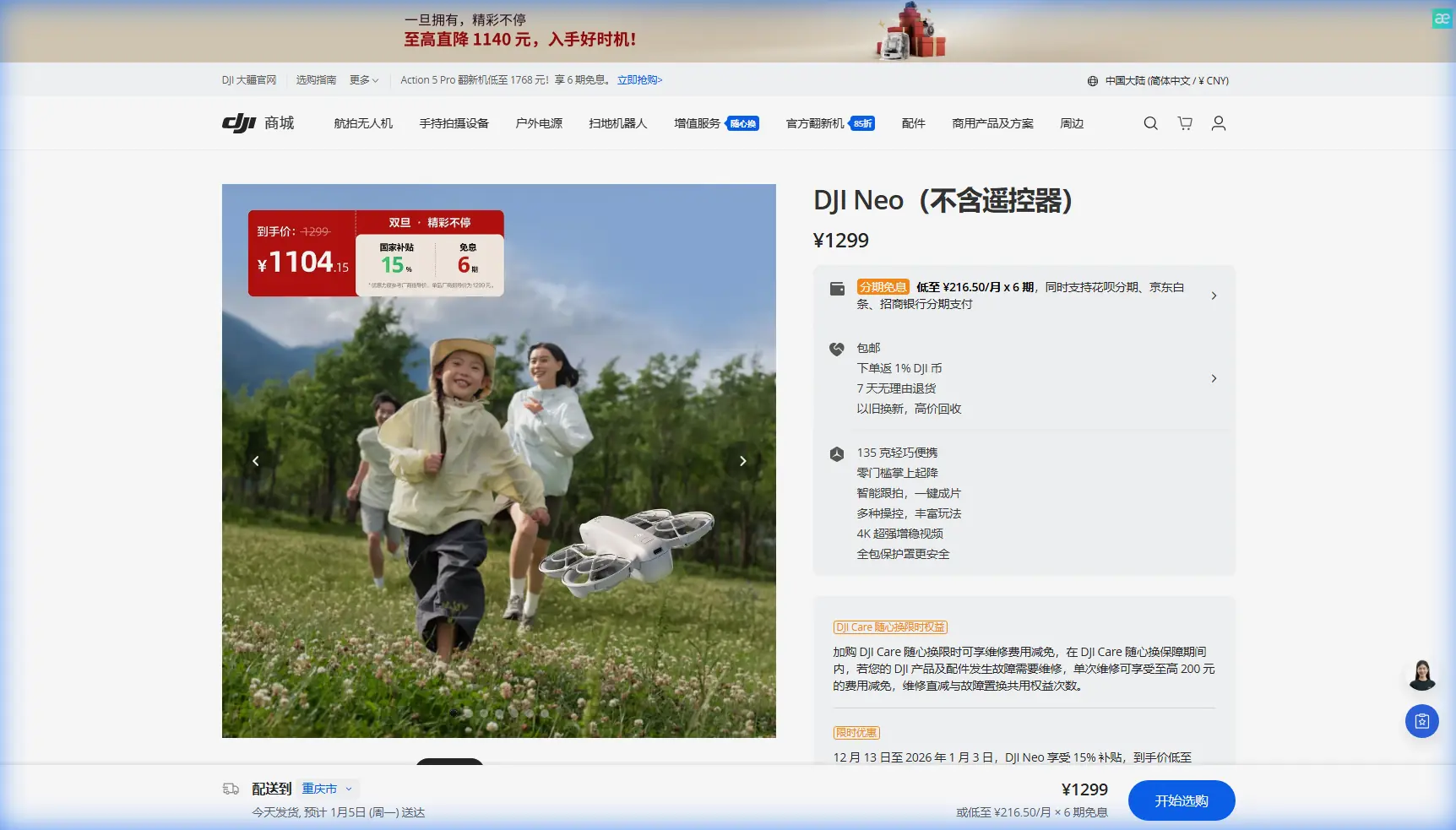
Neo Guide for High-Altitude Power Line Surveys: Camera Triggers, ROI Control, and What Matters When Weather Shifts
META: Learn how to use Neo for high-altitude power line surveying with smart camera trigger planning, ROI control, gimbal direction setup, and reliable photo capture across changing flight conditions.
Power line surveying at altitude is rarely a clean, laboratory-style operation. Light changes. Wind shifts along ridgelines. A route that looked straightforward on the planning screen can become a test of discipline once the drone is actually in the air. That is exactly why camera control matters more than most pilots first assume.
If you are flying Neo for transmission corridor work, the quality of the survey is not just about the aircraft holding position. It depends on whether the camera is being told to do the right thing at the right moment. The reference material behind this article points to a practical truth that applies directly to utility inspection and corridor mapping: the mission succeeds when waypoint logic, image triggering, and camera orientation work as one system.
I approach this as a photographer, but also as someone who knows that utility survey flights live or die on repeatability. For high-altitude power line work, two commands stand out immediately from the source material: DO_SET_CAM_TRIGG_DIST and DO_DIGICAM_CONTROL. They may sound technical, but their operational difference is simple and significant.
DO_SET_CAM_TRIGG_DIST triggers the shutter at regular distance intervals. That makes it especially useful for area coverage and any flight where image spacing needs to remain consistent along the path. DO_DIGICAM_CONTROL, by contrast, fires a single shutter event when commanded. One is built for steady capture patterns. The other is for deliberate, isolated shots.
That distinction matters a great deal when surveying power lines in mountainous or elevated terrain.
Why distance-based triggering fits corridor work
Power line surveys often look linear, but they are not visually simple. Towers, conductors, insulators, access roads, vegetation encroachment, and terrain transitions all compete for attention. If you rely too heavily on manual shutter timing, even a skilled pilot can produce uneven coverage. Some spans end up oversampled while others have gaps.
This is where periodic distance triggering becomes more than a convenience. The source document explicitly describes DO_SET_CAM_TRIGG_DIST as a periodic fixed-distance shutter trigger suitable for area capture. In practice, that same logic is extremely useful for corridor-style documentation because it gives you image spacing tied to ground progression rather than pilot reaction time.
When Neo is moving along a planned route near power infrastructure, distance-based capture helps preserve overlap discipline. That is critical if the mission output is intended for reconstruction, change comparison, asset review, or engineering traceability later. A sequence captured every defined interval is easier to audit than a folder of manually timed images taken under changing wind conditions.
For high-altitude work, this becomes even more valuable. Ground speed can vary as the aircraft compensates for gusts or route geometry. If triggering is distance-based rather than dependent on a pilot tapping the shutter at irregular moments, the image set stays far more usable.
When a single trigger is better
That does not mean every power line mission should be fully automated from start to finish. The second camera command in the source, DO_DIGICAM_CONTROL, exists for good reason. It triggers one shot on command, and that is exactly what you want when the mission includes targeted captures.
Think about a suspected cracked insulator, a hardware assembly that needs a closer look, or a tower top where you want a precise still at a particular angle. In those cases, a single commanded shutter event is more efficient than letting interval capture flood the card with similar frames.
On a practical Neo workflow, the strongest survey missions often combine both ideas. Use route-based distance triggering for the baseline image record, then layer in discrete single-shot moments when a structure, span junction, or terrain crossing deserves extra visual documentation.
That combination creates a survey package that is both systematic and selective.
The role of polygon planning and auto-generated waypoints
One of the most useful details in the reference is the description of Survey (Grid) in Mission Planner. The source explains that this function can automatically define waypoints from a polygon area, then apply DO_SET_CAM_TRIGG_DIST so the aircraft captures photos along the flight path. That sounds like a mapping workflow, and it is. But the operational lesson extends neatly into power line surveying.
Before flying Neo at high altitude, define the corridor and its surrounding inspection envelope with the same rigor you would use for a survey block. The value is not just automation. It is constraint. A polygon or structured route forces the mission to account for coverage boundaries instead of drifting into ad hoc piloting.
The source also mentions Survey (Gridv2) as a developing version that produces auto-photo waypoints using a simpler grid, and SimpleGrid as a grid generator without automatic camera behavior. That contrast is useful. A route alone is not enough. Camera logic must be part of the mission design.
For power line work, many pilots spend a lot of time refining flight lines and not enough time checking whether image capture is embedded correctly. The reference material makes clear that automated waypoint creation and automated camera triggering are related but separate pieces. If Neo is flying a well-shaped path but the shutter logic is not configured properly, the survey can still fail.
ROI and gimbal control are not optional details
The source material goes beyond shutter commands and points to something equally important for transmission surveys: camera pointing. It specifically identifies DO_SET_ROI for directing the camera toward a point of interest with position and altitude, and DO_MOUNT_CONTROL for defining gimbal roll, pitch, and yaw.
This is not background trivia. For power line surveys in elevated terrain, ROI control can make the difference between a clean inspection sequence and a set of images where the subject drifts to the edge of frame.
A fixed route through mountain corridors or over uneven ground often changes the relative geometry between aircraft and asset. If Neo simply flies the line without thoughtful camera pointing, the conductors or towers may not stay framed the way the mission requires. With ROI logic, the camera can remain oriented toward a selected structure or segment. With mount control, you can define the gimbal direction more explicitly.
Operationally, this matters for three reasons:
Consistency across spans
Repeating similar framing from tower to tower makes later review faster and more reliable.Reduced pilot workload
The pilot can focus on airspace, weather, and obstacle management instead of continuously correcting camera aim.Higher usefulness of visual data
When the subject remains centered and properly angled, analysts spend less time discarding compromised images.
If Neo supports obstacle avoidance and subject-aware tools in your broader workflow, that can help maintain confidence during route transitions. But for formal survey structure, command-based camera orientation is still the stronger foundation.
What happened when the weather changed mid-flight
On one high-altitude utility survey scenario, the morning started clean: cold light, stable air, strong visibility down the corridor. The plan was to document a power line section crossing rising ground where tower spacing widened near a ridge shoulder. Neo launched into a structured route with distance-triggered image capture handling the baseline record.
About halfway through, conditions changed faster than the forecast suggested. Wind built from the side, and scattered cloud moved over the corridor, flattening contrast on the structures below. This is where casual flying habits start to show their weaknesses.
The aircraft was still capable, but the mission needed discipline. Instead of abandoning the structured image sequence and switching to improvised manual shooting, the better move was to let the distance-triggered logic continue doing its job. That preserved capture consistency even as visual conditions became less forgiving.
At the same time, selected tower points were treated as priority targets. For those, a more deliberate approach made sense: adjust camera pointing with ROI logic and use single-shot capture where exact framing mattered. The result was not glamorous. It was useful. And useful is what pays off in inspection review.
This is also the moment where features like ActiveTrack or subject tracking, while attractive in many civilian creative flights, are secondary to mission logic. For a high-altitude infrastructure survey, the repeatability of route, orientation, and trigger behavior matters more than cinematic automation. QuickShots and Hyperlapse have their place in presentation work or public-facing utility communications, but not as the backbone of inspection capture.
A practical Neo setup sequence for power line surveying
If I were building a field-ready tutorial around the source material, I would keep it grounded in five steps.
1. Build the route around the inspection objective
Do not start by thinking about camera mode. Start with what must be seen: conductor alignment, tower components, encroachment zones, or corridor context. If your planning tool supports polygon-based mission creation, use that discipline to define the operational envelope. The reference specifically notes right-click access to the task map’s auto mission menu and highlights waypoint creation tools such as Create WP Circle, Area, and Survey (Grid).
For linear utility work, you may not fly a pure grid, but the lesson remains: use structured mission generation rather than hand-drawn guesswork.
2. Apply distance-triggered capture for the main survey record
Set DO_SET_CAM_TRIGG_DIST when your goal is continuous, evenly spaced image acquisition along the route. This is the command from the source best suited to preserving predictable coverage. On long power line segments, it removes the inconsistency that comes from manual shutter timing, especially when wind and altitude shifts affect pace.
3. Add single-shot moments where precision matters
Use DO_DIGICAM_CONTROL for spot captures of features that deserve their own frame. Hardware abnormalities, transition towers, or crossing points often need that treatment. This keeps your data set efficient while still allowing high-value targeted documentation.
4. Use ROI and mount control to stabilize framing
Apply DO_SET_ROI to hold attention on a structure or segment of interest. Use DO_MOUNT_CONTROL when you need explicit roll, pitch, or yaw direction from the gimbal. The source names all three axes directly, and that is operationally significant. In mountainous or high-altitude line work, slight framing errors become larger once you review the imagery later. Direct camera orientation control reduces that risk.
5. Treat accessory outputs as workflow tools, not gimmicks
The source also mentions DO_SET_SERVO and DO_SET_RELAY for controlling servo or relay outputs during the mission, including camera functions beyond the shutter such as zoom or photography-related actions. For specialized civilian inspection payloads, that opens useful integration possibilities. The key is restraint. Any output control should serve documentation quality, not complicate the mission.
Image quality choices still matter
Even though the source material centers on mission and camera commands rather than color science, image profile decisions still shape final survey usability. If Neo offers D-Log, that can be valuable in contrast-heavy mountain light where bright cloud and dark infrastructure share the same frame. A flatter profile may preserve recoverable detail during post-processing.
That said, survey teams should prioritize consistency over style. A technically flexible profile is useful only if the team has a repeatable workflow for processing it. For many utility jobs, a stable and readable image set beats a more cinematic file that no one normalizes correctly later.
The real lesson from the source data
The most practical insight from the reference is not any single menu item. It is the way the pieces fit together.
- Survey (Grid) demonstrates that route generation and camera automation can be linked from the planning stage.
- DO_SET_CAM_TRIGG_DIST shows that image capture should be tied to movement, not pilot improvisation.
- DO_DIGICAM_CONTROL preserves room for deliberate one-off documentation.
- DO_SET_ROI and DO_MOUNT_CONTROL remind us that where the camera looks is just as important as when it fires.
That architecture suits Neo particularly well in demanding civilian inspection contexts like high-altitude power line work, where weather can shift mid-flight and the mission still needs to produce a coherent, reviewable data set.
If you are refining your own Neo survey workflow and want to compare mission-planning options with someone who understands camera-trigger logic in real operations, you can message a field workflow contact here.
A drone can be stable in the air and still underperform as a survey tool. The difference is usually not the aircraft alone. It is the planning discipline behind it. For power line inspections at altitude, that means structured waypoints, intentional camera triggers, and gimbal behavior that serves the asset, not the pilot’s moment-to-moment guess.
Ready for your own Neo? Contact our team for expert consultation.